
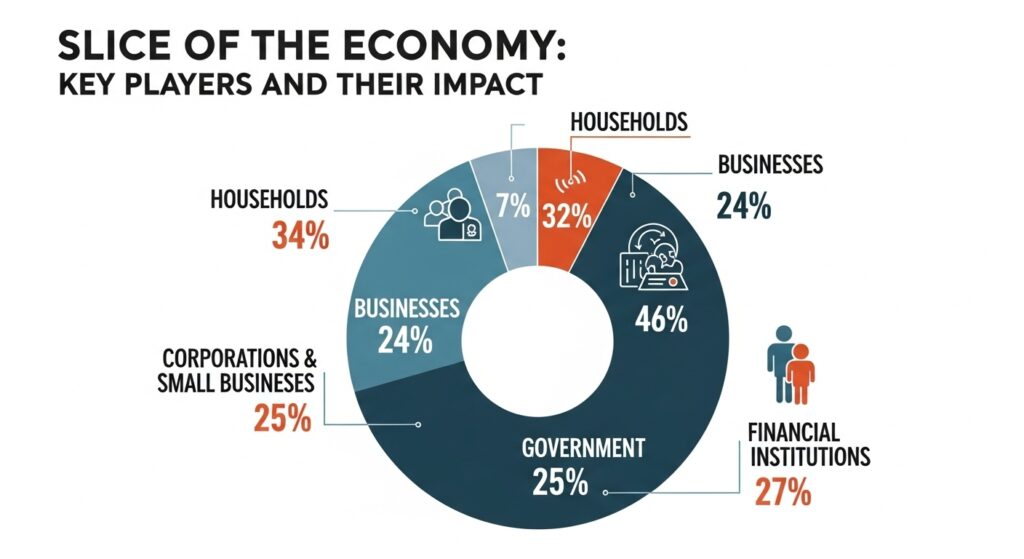
The Slice of the Economy is a complex web of interactions that affects every aspect of our lives. From the price of groceries to job availability, understanding how this intricate system works can feel daunting. Yet, grasping the nuances is essential for making informed decisions in today’s fast-paced world.
One way to simplify this complexity is by examining what we call a “slice of the economy.” This concept helps break down various components and players within it making it easier to see how they all fit together. Whether you’re an investor, a small business owner, or simply someone trying to make sense of rising costs, knowing who the key players are can provide clarity and insight into economic trends that impact us all.
What is Slice of the Economy?
Understanding the phrase “slice of the economy” can illuminate how various sectors and participants interact within our financial landscape. It’s a metaphor that captures the diverse segments contributing to economic activity.
Each slice represents distinct components businesses, consumers, government entities, and global markets all working together in complex ways. These slices collectively form a larger pie, reflecting overall economic health and stability.
When analyzing this concept, one realizes that no single slice operates in isolation. Changes in one area can create ripple effects across others. For instance, consumer spending impacts business revenue, which may influence government policy decisions like tax adjustments or stimulus measures.
Recognizing these interconnected slices allows individuals to better grasp their own role within the economy while navigating challenges and opportunities effectively. Understanding your place among these players enables smarter choices for personal finances or career paths.
Major players in the economy:
The economy thrives on the interaction of several key players, each contributing uniquely to its dynamics. Government entities establish regulations and frameworks that shape economic activities. Their policies can either stimulate growth or hinder progress, depending on their approach.
Businesses are another crucial component. From small startups to multinational corporations, they drive innovation and create jobs. When businesses flourish, so does consumer confidence, leading to a more vibrant market.
Consumers complete this triad. Their spending habits influence demand for products and services. As preferences shift, businesses must adapt quickly to meet these changes or risk obsolescence.
Financial institutions facilitate transactions and provide capital necessary for expansion. Together, these players create an intricate web that defines our slice of the economy. Understanding their roles can illuminate how decisions impact everyday life.
Impact of government policies and regulations on the economy
Government policies and regulations are crucial components of a thriving economy. They set the framework within which businesses operate, impacting everything from taxation to labor laws.
When governments implement favorable policies, they can stimulate growth. Tax incentives may encourage investment in local infrastructure or innovation. This often leads to job creation and increased consumer spending.
Conversely, stringent regulations can stifle economic activity. Excessive red tape might deter new companies from entering the market or compel existing businesses to downsize. The balance is delicate; too much regulation can hinder progress while too little may lead to instability.
Moreover, government intervention during crises—like financial downturns or pandemics—can have lasting effects on recovery and resilience. Policies aimed at stabilizing markets play a significant role in shaping public confidence as well as overall economic health.
Understanding these dynamics helps individuals see how interconnected their lives are with governmental decisions affecting the broader economy.
Influence of businesses on economic growth and stability
Businesses play a vital role in shaping economic landscapes. They create jobs, which boosts local employment rates and provides income for families. As people earn wages, they spend more, driving demand for goods and services.
Innovation is another critical factor. Companies invest in research and development to create new products or enhance existing ones. This not only satisfies consumer needs but also fosters competition, which can lead to improved quality and reduced prices.
Moreover, businesses contribute to government revenues through taxes. These funds support public services like education and infrastructure—essential elements for long-term stability.
However, the impact of businesses isn’t solely positive. Economic downturns often stem from corporate mismanagement or unethical practices that can destabilize markets. Thus, the health of local economies often mirrors that of their business sectors a reminder of their significant influence on overall growth.
The role of consumers in shaping the economy
Consumers hold significant power in the economy. Their choices directly influence market trends and business practices. When people favor sustainable products, companies often adapt by prioritizing eco-friendly options. This shift not only reflects consumer preferences but also drives innovation.
Spending habits shape demand for goods and services. A surge in interest for tech gadgets can lead to rapid advancements in that sector. Conversely, a decline may prompt businesses to pivot or even close their doors.
Moreover, consumers play a crucial role during economic downturns. Their spending helps stimulate recovery efforts, highlighting how interconnected every decision is within the marketplace.
Social media amplifies this impact further; reviews can propel small brands into stardom overnight while damaging reputations with just one negative post.
Informed consumers contribute to healthier economies by supporting responsible practices and fostering competition among businesses.
Effects of global economic trends on local economies
Global economic trends have a profound ripple effect on local economies. When international markets fluctuate, so do opportunities for local businesses. A downturn in major economies can lead to decreased demand for exports, impacting local jobs and income levels.
Conversely, when global markets thrive, regions that rely on trade often experience an influx of investment. This can boost employment and stimulate growth within communities.
Currency fluctuations also play a critical role. A strong dollar might deter foreign buyers from purchasing locally produced goods while benefiting those who import products.
Additionally, advancements in technology and communication create new avenues for small businesses to reach broader audiences beyond their immediate surroundings. However, they must navigate fierce competition from established players worldwide.
Staying attuned to these global dynamics is essential for local economies aiming to adapt and thrive amidst ever-changing conditions.
How understanding these key players can help individuals navigate the economy more effectively
Understanding the key players in the economy equips individuals with valuable insights. When you grasp how government policies shape financial landscapes, you can better anticipate market shifts.
Businesses are another essential factor. Recognizing their impact on job creation and wage levels allows consumers to make informed choices about where to work and shop.
Consumers themselves wield significant influence too. By understanding spending patterns, individuals can align their purchases with ethical brands or local businesses, enhancing community support while contributing to economic growth.
Awareness of global trends is crucial as well. Economic fluctuations overseas can ripple through local markets. Staying informed means you’re prepared for changes that could affect your personal finances.
This holistic approach empowers individuals to navigate challenges more confidently, making decisions that align with both personal goals and broader economic realities.
Conclusion
Understanding the slice of the economy is essential for everyone. It allows individuals to grasp how various players interact and impact their daily lives. From government policies that shape regulations to businesses driving innovation, each component plays a vital role in economic dynamics.
Consumers also hold significant power; their choices can influence market trends and drive demand for goods and services. Moreover, global economic shifts often trickle down to local markets, affecting jobs, prices, and overall stability.
By being aware of these connections, people can make informed decisions about spending, investing, or even advocating for policy changes. Knowledge empowers individuals not only to navigate the complexities of the economy but also to contribute positively within it.
Engaging with this information helps demystify economic concepts. As you become more familiar with your own slice of the economy, you equip yourself with tools needed for personal growth and community development. The journey into understanding economics is ongoing embracing it can lead to better outcomes both personally and collectively.